SUBJECT: AI Training for Customer Service - Implementing Assistants
AI Training in Customer Service - How to Implement an Intelligent Assistant Without Losing Quality
> Key Takeaways
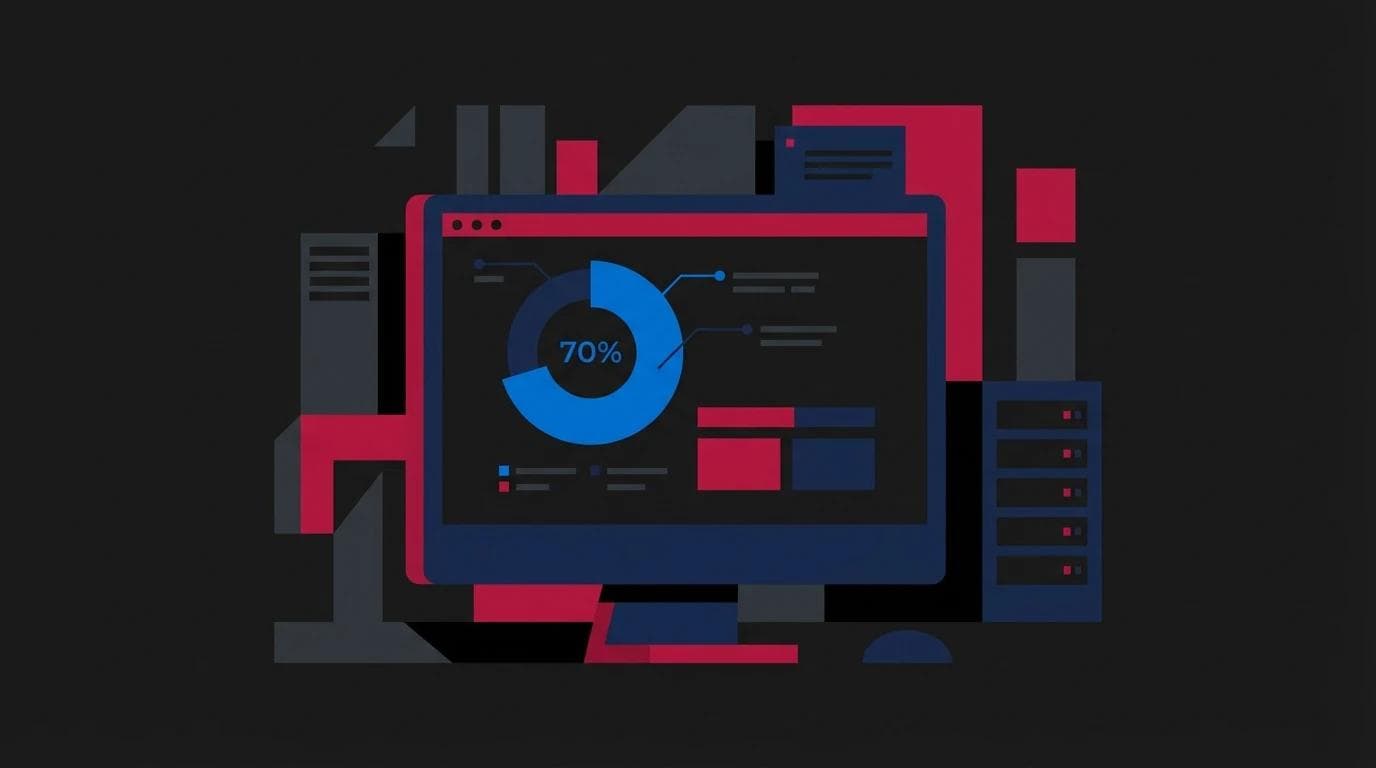
AI training in customer service is a strategic investment that allows for the automation of up to 70% of repetitive queries, such as verifying order status or providing basic product information. The most important part of this transformation is moving away from rigid chatbots based on decision trees, which often frustrate users, toward intelligent large language models (LLMs). Professional AI training for business teaches teams how to work with these tools to ensure communication is natural and helpful. However, an engineering approach is crucial to protect the company from AI hallucinations - situations where the model might invent non-existent promotions or mislead the customer. Measurable profit comes directly from the recovered time of consultants, who can then focus on building relationships and resolving complex complaints.
When implementing technology in the Customer Service department, consider the following aspects:
- Evolution of conversational interface - old-school "if-this-then-that" chatbots discourage customers with their lack of flexibility. Modern AI training from scratch shows how to implement assistants that understand context and natural speech.
- Data security and reliability - AI models can deviate from the truth if they are not properly restricted to the company's knowledge base. Therefore, in more demanding processes, dedicated applications provide full control over generated messages.
- Drastic time savings - an intelligent bot handles most routine questions independently, making AI in business ROI visible within the first months after full system launch.
Understanding these mechanisms is the first step toward ensuring that AI training for companies brings real change rather than just a PR effect. Instead of building "golden cages" of subscriptions, it is worth investing in process automation ownership, which guarantees technological independence and cost stability. Only combining the team's reliable knowledge with a secure IT architecture allows for the effective replacement of tedious data copying with intelligent algorithms.
> What is professional AI training in customer service and why it protects the company from automated errors
Professional AI training in customer service is the process of transforming the support department from passive response to proactive user experience management using advanced generative models. Their main goal is to eliminate reputation risk by implementing RAG (Retrieval-Augmented Generation) technology, which limits the bot's knowledge base exclusively to official company documents, and training the team to oversee these systems. As a result, AI becomes a safe assistant rather than an unpredictable content generator, directly protecting the organization from hallucinations and unauthorized declarations.
A classic "dumb" bot based on rigid templates usually disconnected from the customer the moment they failed to click the right button or made a spelling error. Modern AI training for business teaches the implementation of models that not only understand the frustration and impatience of buyers but can also smoothly navigate out of a communication impasse. However, this flexibility brings new challenges - generative AI, without proper system instructions, can behave too creatively or even irresponsibly toward the brand.
At 01tech, our implementations and workshops are based on setting a "hard track" for algorithms. We program assistants to strictly adhere to business logic: "Assistant, if the package is delayed due to the customer's fault, respond in manner X, maintaining empathy but not granting a discount." A key security element is the silent alarm mechanism. If a word like "lawsuit" or another legal signal appears during the conversation, the system automatically and without informing the user notifies a live human consultant. Such dedicated applications with built-in process intelligence ensure that no critical lead or problem is ignored.
By investing in AI training for companies, a business gains confidence that employees can manage this technology according to applicable standards. Proper AI security in the company requires awareness that the model is only a tool that must be set within tight frameworks. Understanding the difference between a public chat and a closed API allows for building process automation that truly relieves support without the risk of data leaks. How to introduce these solutions without team resistance is described in our comprehensive AI training for companies - guide, which is the foundation for any modern transformation in the Customer Success area.
> Step 1 - Process Audit and Identifying Communication Bottlenecks
Implementing artificial intelligence in the customer service office (CSO) often ends in failure because companies skip the most important stage - the analytical audit. Instead of installing generic chatbots, one should start with a deep insight into historical communication data. Analyzing tens of thousands of queries allows for understanding which problems are repetitive and which require human intervention. This strategy helps avoid "burning" the budget on tools that the team will not be able to use effectively anyway. Comprehensive AI training for companies always begins with learning to map these processes so that technology serves business goals, not just trends.
Categorizing requests - what to give to the machine and what to leave for humans
Customer service cannot be "given to the machine" without thought. As engineers, we know that the devil is in the statistics. Analyzing real data from support departments often reveals a striking pattern: nearly 60% of all emails are simple queries about order status, the classic "Where is my package?". Another 15% concern repetitive procedures, such as questions about how to complain about defective goods. It is in these areas, the tightest communication bottlenecks, where professional process automation brings the greatest return on investment.
During workshop sessions, we teach how to concentrate heavy automation in an environment exclusively on these simple, mass cases. This allows AI systems to handle 3/4 of the traffic without human intervention while maintaining 100% response precision. On the other hand, niche processes, high-complexity complaints, or matters requiring empathy are directed immediately to consultants from the start. This approach ensures that AI training for business becomes a real operational change, not just a course on chat operation. For more complex needs, companies often opt for dedicated applications, which allow for deeper integration with internal ERP systems or warehouses. Knowledge of how to use custom AI assistants in the company allows the team to independently optimize these paths in the future.
> Step 2 - Building a Secure Knowledge Base and Choosing Enterprise Technology
The foundation of professional AI implementation in customer service is realizing that a large language model (LLM) without proper context is just a statistical word generator. For a service bot to be reliable and useful, it must operate exclusively on your data - return policies, technical specifications, or SQL databases - rather than on general knowledge from the internet. The first engineering step is therefore to organize these resources and choose an infrastructure that ensures their isolation. Understanding the difference between public vs enterprise chatgpt is the absolute basis for protecting intellectual property and data security, which we often emphasize when conducting AI training for business for the SME sector.
Choosing Enterprise technology is a decision to completely cut off the model from training on your queries. Using secure APIs, we build an environment where AI has no chance of "leaking" confidential information to the outside. This approach eliminates the costs of shadow AI in the company, meaning the risks associated with employees using private, unsecured accounts. Smooth and secure AI training from scratch allows the team to understand that this technology is a tool for working on specifics, not a platform for free conversation.
RAG technology as a cure for artificial intelligence hallucinations
Hallucinations, or AI generating invented answers, result from an attempt to "fill in the gaps" in knowledge. The engineering solution is RAG (Retrieval-Augmented Generation) technology, which forces the model into a two-stage process: first, it searches your knowledge base for a specific paragraph, and only then does it formulate an answer based on it. We force the model to "stay in a closed box" of your documents, which practically zeros the risk of giving the customer incorrect information about prices or deadlines. This is a fundamental lesson included in our guide to AI training for companies.
As a result, the customer service assistant does not have to rely on its "internet memory." We provide it with your return policy and dimension tables, and we reduce prompt engineering for business to precisely instructing the AI to simply admit ignorance and pass the thread to a human if information is missing in the source. Such designed process automation builds customer trust and allows for real company scaling without hiring additional consultants to handle repetitive questions.
> Step 3 - Training the Team in AI Oversight and Handling Difficult Cases
Implementing artificial intelligence in the customer service office does not mean handing over the reins to a machine and forgetting about it. The key to success is the human-in-the-loop model, where employees become elite overseers of technology. The machine always has the right to give up in the face of chaos; a human does not. Therefore, modern AI training from scratch emphasizes not just the operation of the chat itself, but the ability to critically verify the bot's responses and take control when the situation becomes non-standard.
The CSO team must be taught to work "in the shadow." Systems based on dedicated applications use linguistic text analysis to assess customer emotions in real time. If the assistant detects growing frustration or profanity, it signals that it is losing ground. The consultant then receives a notification along with a cleverly built summary of the incident history. This allows for a smooth entry into the dialogue without having to ask the customer the same questions, which instantly puts out a potential reputation fire.
Practical AI in practice training should cover three critical team competencies:
- Substantive verification - learning to catch so-called AI hallucinations, where the model generates convincingly sounding but incorrect technical or pricing data.
- Escalation management - training on smooth switching from bot to human so the customer does not feel discomfort associated with changing the interlocutor.
- Knowledge base optimization - employees reporting documentation gaps that led to bot errors, allowing for continuous improvement of process automation.
For management, it is crucial to understand that such a transformation requires a mental shift. By using AI training for managers, bonus systems can be designed based on the quality of oversight, not just the number of closed tickets. In this way, the company builds resilience to technological errors while maintaining the human element where it is necessary. A comprehensive approach to this stage is discussed in detail in our AI training for companies - guide, which shows how to avoid common implementation pitfalls. The ultimate goal is a situation where AI training for business truly relieves people from routine, leaving them space to solve matters requiring empathy and advanced logic.
> Step 4 - Integrating the Assistant with CRM and Quality Analytics
Real intelligence in customer service is not about generating nice-sounding sentences, but about solving users' physical problems. To achieve this, technical AI implementation in the company that goes beyond a simple chat window is necessary. The system must be connected to your infrastructure via a secure API, allowing the model access to real-time data.
In our daily work at 01tech, we build integrations with systems such as Shopify or BaseLinker. This allows the assistant to independently check order status in the database, track a package by code, and even initiate a refund directly to the customer's account. Such AI tool training for technical teams allows for eliminating the administrative stage on the part of service employees by several dozen percent.
To ensure the process is fully secure, we use an architecture that protects sensitive data. Caring for AI data security, we opt for closed Enterprise environments rather than public solutions. For specific business processes, dedicated applications work best because they allow for any mapping of decision paths without the limitations known from typical SaaS platforms.
The final stage of implementation is quality analytics and monitoring progress. Professional AI training teaches managers how to read conversation logs and detect moments where the model requires prompt parameter adjustments. You can read more about the strategic approach to such a transformation in our guide to training for companies.
Key benefits of full integration
- Return process automation - the system independently verifies regulations and performs actions on the sales platform.
- Access to CRM history - the assistant personalizes help by knowing previous reports and purchases of a specific customer.
- Measurable ROI - analytical systems allow for precisely indicating the number of hours recovered by the team.
- Continuous optimization - feedback loops allow for improving the bot's knowledge base based on real questions.
> FAQ - Most Frequently Asked Questions about AI Training in Customer Service
Introducing intelligent tools to front-line teams raises many questions about technicalities and security. Below we have gathered key issues that most often appear during investment planning for AI training for business.
Does AI training in customer service require programming skills?
Absolutely not. Modern tools are designed to be intuitive for office workers and managers without technical training. Our AI training from scratch focuses on practical interface operation and learning so-called prompt engineering - precisely issuing commands in natural language. The goal is for every employee to be able to independently create custom AI assistants in the company that will relieve them of routine tasks, such as classifying reports or generating responses to frequent queries.
How to ensure customer data security using OpenAI or Claude models?
This is the most important aspect of any implementation. A basic mistake is using free, public versions of chats, which may use entered data to train models. To maintain GDPR standards, we recommend ChatGPT training for business based on API usage or the Enterprise version. In such a model, data is transmitted in a closed manner and is not used to train global artificial intelligence. During workshops, we discuss AI security in the company in detail, showing how to configure permissions and privacy filters so that company secrets and personal data are fully protected.
How long does it take to train the team and launch the first assistant?
Full team preparation for working with new tools usually takes one intensive workshop day or a cycle of several online meetings. On the other hand, building the first assistant (MVP) that truly supports processes takes from a few days to a maximum of four weeks. During this time, process automation is implemented, integrating CRM systems with language models. It is worth noting that intelligent bots do not discourage customers at all - quite the opposite. Modern systems can perfectly imitate human empathy and linguistic patience. In blind tests, customers often do not realize at all that an automated system helped them solve a difficult hardware problem at 2:00 AM. Such operational efficiency directly translates into positive AI in business ROI, eliminating bottlenecks in the Customer Service department. If your company has specific requirements, it is worth considering dedicated applications, which allow for full control over the interface and service logic. The entire AI implementation process in the company is designed to minimize downtime in the department's current work.